Skip to content
Mon–Fri & Sun: 8am–6pm · Closed Saturday
ES
Bed Bugs Exterminator Bronx Licensed NYC Exterminators

Carpenter Ant & Ant Control in The Bronx

Last updated: 27/06/2026

A carpenter ant exterminator in NYC locates both the parent colony and its satellite nests, treats with targeted baiting and residual dusting, and identifies the moisture source drawing them in — without fixing the leak, the colony returns within a season.

Carpenter antsPavement antsOdorous house antsPharaoh antsParent + satellite nest locationMoisture source identification

Get Your Free Quote

Or call now: (718) 000-0005

Licensed
& insured NY exterminators
4.9★
332 Google reviews
All 5 Boroughs
Neighbourhood-level NYC coverage
Guaranteed
We return until it's resolved
NY DEC License 15739

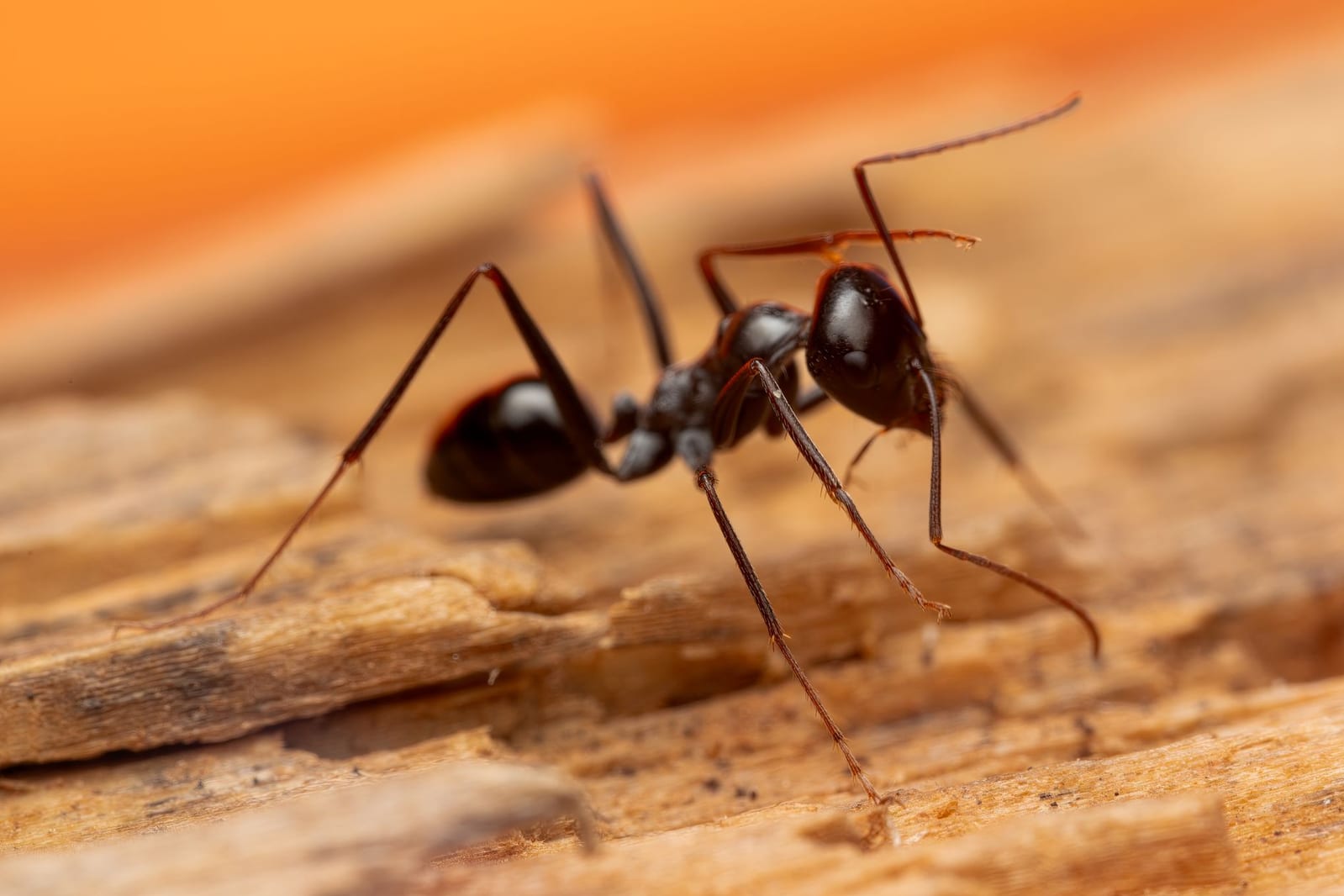
Carpenter ants (Camponotus pennsylvanicus, the large black species most NYC residents encounter) are the ant problem that actually warrants a licensed exterminator. Unlike pavement ants foraging for crumbs, carpenter ants are excavating galleries inside wood — the damp floor joists of a pre-war brownstone, the rotting window sill of a top-floor apartment, the water-damaged parapet wall of a flat-roofed building. The frass they push out — coarse, fibrous sawdust mixed with insect body parts, nothing like the powdery frass of termites — is often the first sign that structural wood is being hollowed.

The critical thing to understand about carpenter ants in a NYC building: the colony you're treating probably isn't where you think it is. Most active infestations involve a parent colony in a moisture-damaged void — often behind a wall, under a flat roof, or in a damaged lintel — and one or more satellite colonies closer to the food source (your kitchen). Treating the satellite alone is how most DIY attempts fail. A licensed exterminator finds and treats the parent nest; moisture remediation keeps it from coming back.

In NYC's building stock — pre-war walkups, brownstones with original wood framing, flat-roofed buildings with chronic leak histories — carpenter ants thrive wherever water damage has softened wood. Tree limbs touching brick facades, condensation around window air-conditioner units, and parapet wall cap failures are the access and attraction points a 20-year NYC exterminator looks for first.

Are those large black ants in my NYC apartment carpenter ants — and are they dangerous?

University of Minnesota Extension explains that carpenter ants do not eat wood — they remove it to create galleries and tunnels for nesting, pushing the chewed-out sawdust outside. Their parent nests are found in moist or decayed wood from water leaks, condensation or poor air circulation, so an indoor carpenter-ant problem usually signals a hidden moisture issue that needs fixing too. (University of Minnesota Extension — Carpenter Ants)

University of Minnesota Extension describes how carpenter ant colonies operate as a parent nest plus one or more satellite nests: the parent nest needs moist wood, while satellite nests can hold workers, older larvae and pupae in drier wood closer to a food source indoors. This is why treating only the visible indoor foragers fails — the parent colony survives and re-seeds the satellites unless it is located and treated. (University of Minnesota Extension — Carpenter Ants)

University of California IPM explains why baiting beats spraying for ants: foraging workers carry small portions of bait back to the nest, where it is passed mouth-to-mouth to other workers, larvae and queens, killing the whole colony. Spraying around the foundation only kills the foragers you see, leaving the colony and its queens intact — so it will not provide permanent control. (UC Statewide IPM Program — Ants)

Penn State Extension notes that the swarming winged reproductives of carpenter ants are commonly mistaken for termite swarmers, but the two are easy to separate: ants have a constricted, pinched waist, elbowed (bent) antennae and front wings longer than the hind wings, whereas termites have a broad waist, straight beaded antennae and four wings of roughly equal length. (Penn State Extension — Carpenter Ants)

Utah State University Extension notes that odorous house ants — a common NYC look-alike for budding indoor colonies — get their name from the rotten, coconut-like smell they give off when crushed, a quick field test that separates them from pavement ants. About 3 mm long and brown-to-black, they readily nest indoors and reproduce by budding. (Utah State University Extension — Odorous House Ant)

Carpenter ants vs. termites — the two-minute identification check

Carpenter antEastern subterranean termite
WaistPinched (petiole between thorax and abdomen visible)Broad and uniform — no pinch
AntennaeElbowed (bent at a clear angle)Straight, beaded
Swarmer wingsForewings noticeably larger than hindwingsAll four wings roughly equal length
Frass / debrisCoarse, fibrous — looks like shredded wood mixed with insect partsFine soil/mud packed into galleries and mud tubes
Wood damageSmooth galleries along the grain; clean inside (does not eat wood)Galleries packed with soil and mud; never clean (eats wood)
Moisture requirementParent nest in already-softened, moist or decayed woodNeeds soil contact and high moisture; builds mud tubes

Signs you have a ant control problem

  • Coarse, fibrous frass (not powder — more like shredded wood mixed with insect debris) near woodwork, windowsills, or along baseboards
  • Large black ants (12–25mm) seen indoors, especially at night when foragers are active
  • Rustling or crinkling sounds inside walls, particularly on quiet evenings — the sound of workers excavating galleries
  • Winged swarmers (reproductive ants with wings) appearing indoors in late winter or spring — indicates an established colony nearby
  • Soft or discoloured wood around windows, door frames, or where a roof or wall meets a parapet

Why The Bronx sees this

Flat-roofed pre-war buildings are the highest-risk structure in NYC for carpenter ants — chronic parapet and roof drain failures soften the wood below the parapet cap, giving the colony a protected void that building staff rarely inspect.

Brownstone floor joists at or below grade level are a classic carpenter ant habitat — moisture wicks up from the basement, softening the sill plates and lower joists where the colony establishes.

NYC street trees with large canopies that touch building facades create a direct route from an outdoor colony into the building fabric — trimming limbs to maintain clearance breaks the access.

Carpenter ant swarms in late winter or early spring (February–April in NYC) are frequently mistaken for termites. The two-minute identification test: if the swarmer has a pinched waist and bent antennae, it is an ant; if the waist is uniform-width and the wings are equal length, call for a termite inspection.

Simple, transparent process

Our Carpenter Ant & Ant Control Process

  1. 1

    Species confirmation

    We confirm the species — carpenter ants vs. termites vs. nuisance ants is not always obvious to the untrained eye. Large black ants with a single node at the waist and elbowed antennae are almost certainly Camponotus pennsylvanicus; termite swarmers have a broad waist and equal-length wings. Getting this right determines the entire treatment approach.

  2. 2

    Locate parent + satellite nests

    We probe the likely moisture-damaged voids: window frames, sills, parapet walls, flat-roof penetrations, bathroom walls, and basement joists. Nests in structural wood are identified by frass deposits, acoustic detection, and probe tests on soft or discoloured wood.

  3. 3

    Moisture-source inspection

    Carpenter ants do not create moisture — they exploit it. We identify the active leak or chronic damp condition (failed flashing, slow roof leak, condensation around HVAC penetrations, cracked parapet cap) and report it to you in writing. Without addressing the moisture, recolonisation within one to two seasons is likely.

  4. 4

    Targeted baiting and residual dusting

    We apply non-repellent bait that foraging workers carry back to the parent colony, and inject residual insecticide dust into wall voids and nest galleries where baiting alone may not penetrate. Perimeter sprays are a secondary measure, not the primary treatment.

  5. 5

    Follow-up inspection

    We return in two to three weeks to confirm colony activity has ceased. Reduced frass, no live workers, and absence of sound in the voids are the three indicators we check before declaring the treatment complete.

Carpenter Ant & Ant Control — FAQs

Are carpenter ants dangerous or just a nuisance?

Carpenter ants excavate galleries in wood and, over time, can weaken structural elements — especially in moisture-damaged joists, sills, and window frames common in older NYC buildings. They do not eat wood the way termites do, but a large established colony causes real structural damage. A licensed exterminator should inspect any large black ant sighting in a brownstone or pre-war building.

What is the difference between carpenter ants and termites?

The two are frequently confused, especially when swarmers appear. Carpenter ants have a pinched waist, elbowed antennae, and forewings larger than hindwings. Termite swarmers have a broad, uniform waist, straight beaded antennae, and wings of equal length. Carpenter ant frass is coarse and fibrous; termite frass is fine powder. If you are unsure, a licensed exterminator confirms the species before any treatment begins.

Why do I keep getting carpenter ants even after treating?

The most common reason is an untreated parent colony — often hidden in a moisture-damaged void behind a wall, under a flat roof, or in a basement joist — combined with an active moisture source. Treating only the visible foragers eliminates the satellite; the parent colony re-seeds the building within months. A thorough inspection finds both nests and identifies the moisture problem.

Can I get rid of carpenter ants myself?

Hardware-store perimeter sprays are repellents — they push foragers away temporarily but do not reach the colony. Bait products available without a license are slower-acting and rarely penetrate the deep voids where the parent nest sits. In a NYC multi-unit building where the colony may be several floors away from the visible ants, professional nest-location and void treatment is the only reliable approach.

When is carpenter ant season in New York City?

Carpenter ant foragers become active indoors in late winter (February–March) as the colony ramps up ahead of spring reproduction. Swarmers — winged reproductives — appear from late winter through April, which is the most common trigger for a service call. Colony activity continues through summer and slows through November. Swarmers indoors in spring indicate an already-established colony.

Need ant control in The Bronx?

Licensed, insured, local NYC exterminators. Call to schedule.

Call Now Free Quote