Ant control in The Bronx: what to know
The Bronx is dominated by large pre-war apartment buildings, especially along the Grand Concourse — interconnected basements, shared trash rooms and aging plumbing drive heavy mouse, rat and German-cockroach pressure.
Busy commercial corridors like Fordham Road and the borough's restaurant density feed rodents into surrounding residential blocks.
High-density apartment living makes bed bug spread between units a constant risk, and 'water bugs' from shared plumbing are common in older buildings.
How much does carpenter ant & ant control cost in The Bronx?
$60–$500
National average: $150–$250 per visit (Angi). Typical single treatment: $80–$500 (small infestation). Bob Vila national range: $60–$215. Follow-up/retreatment visits: $40–$120.
US national figure — NYC typically runs higher.
Tier-2 NYC industry sources cite the Bronx and Staten Island as generally the most price-competitive boroughs for pest control, though this is directional signal from industry blogs, not an independently verified figure.
Market range — not our quote
This is a market range synthesised from published cost guides — not a quote from this provider. The actual price depends on an in-person or photo-based inspection.
US national — NYC typically higher; no NYC-specific ant cost guide located, unlike bed bugs/rats/roaches.
What drives the price
- Infestation location (attic/basement/exterior walls cost more than kitchen/living space due to access difficulty)
- Severity
- Treatment method
- One-off vs follow-up retreatment
Signs you need ant control
- Coarse, fibrous frass (not powder — more like shredded wood mixed with insect debris) near woodwork, windowsills, or along baseboards
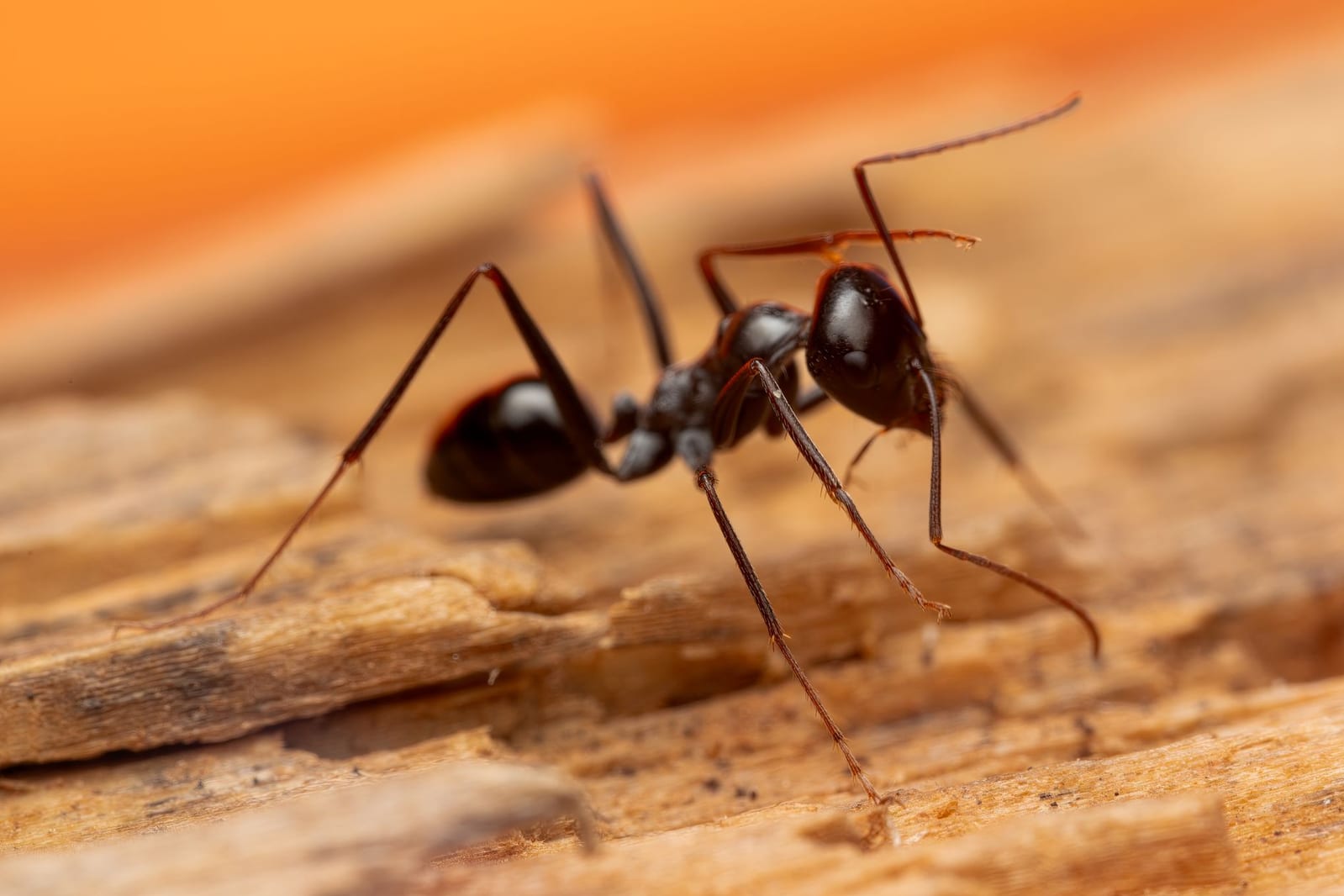
- Large black ants (12–25mm) seen indoors, especially at night when foragers are active
- Rustling or crinkling sounds inside walls, particularly on quiet evenings — the sound of workers excavating galleries
- Winged swarmers (reproductive ants with wings) appearing indoors in late winter or spring — indicates an established colony nearby
- Soft or discoloured wood around windows, door frames, or where a roof or wall meets a parapet
How we treat ant control in The Bronx
Carpenter ants (Camponotus pennsylvanicus, the large black species most NYC residents encounter) are the ant problem that actually warrants a licensed exterminator. Unlike pavement ants foraging for crumbs, carpenter ants are excavating galleries inside wood — the damp floor joists of a pre-war brownstone, the rotting window sill of a top-floor apartment, the water-damaged parapet wall of a flat-roofed building. The frass they push out — coarse, fibrous sawdust mixed with insect body parts, nothing like the powdery frass of termites — is often the first sign that structural wood is being hollowed.
The critical thing to understand about carpenter ants in a NYC building: the colony you're treating probably isn't where you think it is. Most active infestations involve a parent colony in a moisture-damaged void — often behind a wall, under a flat roof, or in a damaged lintel — and one or more satellite colonies closer to the food source (your kitchen). Treating the satellite alone is how most DIY attempts fail. A licensed exterminator finds and treats the parent nest; moisture remediation keeps it from coming back.
Local landmarks & coverage
We serve all of The Bronx and the surrounding The Bronx area — including Grand Concourse, Yankee Stadium, Bronx Zoo, Fordham Road — across ZIP codes 10451, 10452, 10453, 10456, 10457, 10458.