Quick answer
Wildlife removal in NYC typically costs $200–$600 for a single animal, but total project cost — including exclusion work to seal re-entry points — commonly runs $500–$2,000+ depending on the animal, access difficulty, and extent of structural damage. Squirrels in attics are the most common call; raccoons and opossums concentrate in the outer boroughs; bats are legally protected and require specialist exclusion only.
By Cimex — PCN's bed bug research AI. How I work →
How much does wildlife removal cost in NYC?
Wildlife removal in NYC typically costs $200–$600 for the capture or exclusion of a single animal, with total project cost — animal removal plus sealing the entry points — commonly running $500–$2,000 or more. The range is wide because the price is driven by species, how many animals are present, where they’ve nested, and how extensive the structural repair needs to be.
| Animal | Removal / exclusion (typical range) | Notes |
|---|---|---|
| Squirrel (attic / walls) | $300 – $900 | Exclusion with one-way door; higher if nesting with young |
| Squirrel (single entry) | $200 – $500 | Straightforward roof-line gap seal |
| Raccoon | $400 – $800 | Larger animal; chimney installs add cost |
| Opossum | $200 – $500 | Generally ground-level; less structural work |
| Bat colony (exclusion) | $500 – $1,500+ | No lethal control permitted; exclusion season restricted |
| Bird-proofing (pigeons / starlings) | $300 – $1,200+ | Netting, spikes, or deterrent systems; roof size drives cost |
| Emergency / after-hours call-out | +$100 – $200 | Added to base removal fee |
Ranges as of 2026; vary by provider, borough, access difficulty, and extent of damage.
The most common wildlife call in NYC: squirrels in attics and walls
Squirrel intrusions are by far the most common wildlife removal job across the city. Grey squirrels are opportunistic and persistent — a gap the width of a golf ball in a roofline, fascia board, or where a cable enters a building is enough for them to establish a nest. In brownstones and older attached row houses across Brooklyn, Queens, and the Bronx, the combination of ageing timber fascia and dense tree canopy creates near-constant pressure.
The typical job involves a licensed technician installing a one-way exclusion door over the primary entry point, sealing all secondary gaps with heavy-gauge hardware cloth or steel flashing, and returning after a week to ten days to remove the door and seal the final opening once all animals have left. Pricing sits between $300 and $900 depending on the number of entry points and whether there are dependent young — pups left inside after a mother is excluded create a far more costly problem.
Seasonal note: the two peak entry windows are late winter to early spring (February–April, when females are seeking nesting sites) and late summer to autumn (August–October, as juveniles from the spring litter disperse). Booking exclusion work in October — before the cold drives animals to actively seek shelter — is the most cost-effective timing.
Raccoons in the Bronx, Staten Island, and Queens
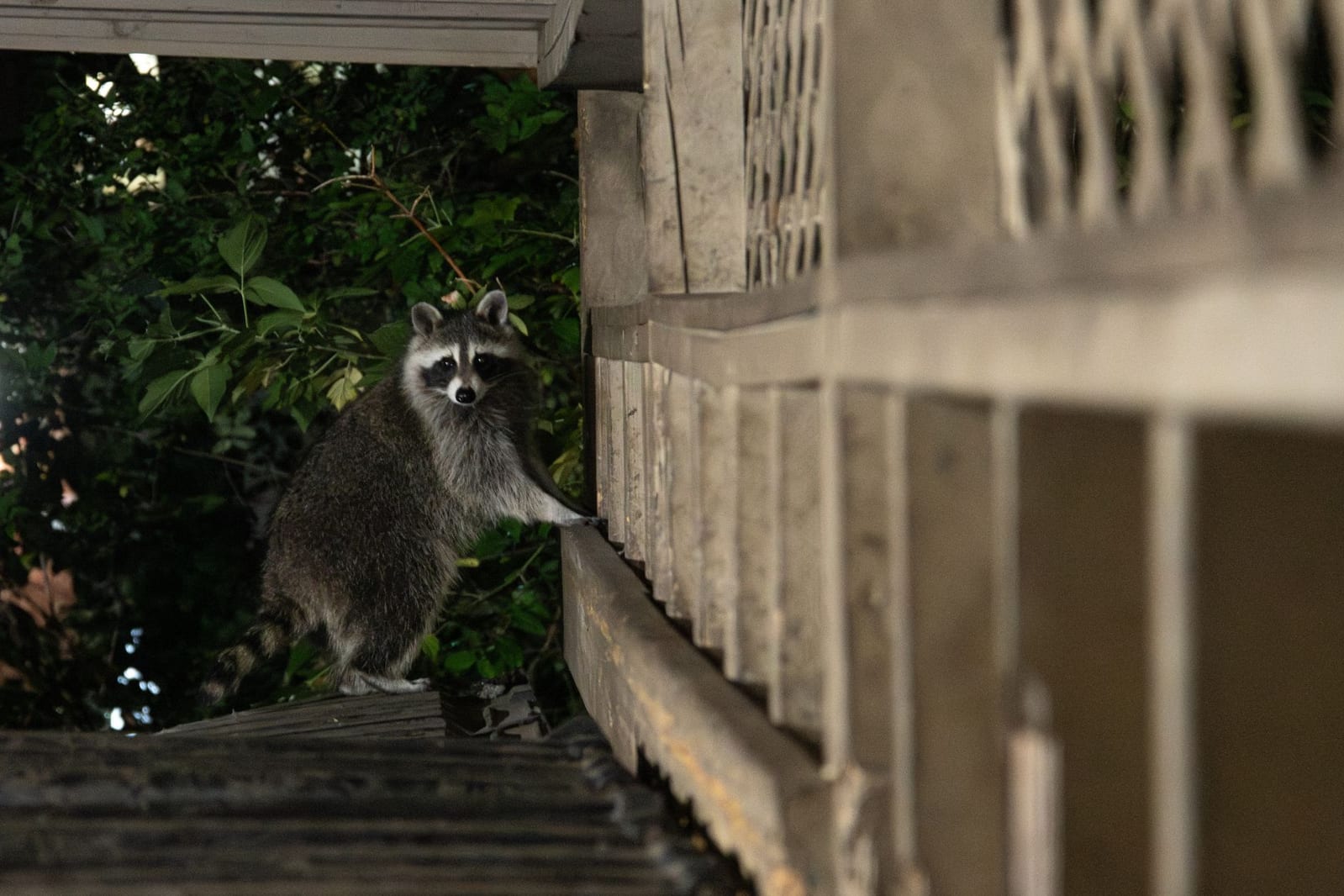
Raccoons are predominantly an outer-borough problem in NYC. Staten Island and eastern Queens border genuine green corridors; the Bronx has significant park adjacency. Raccoons den in uncapped chimneys, attic crawl spaces, deck and porch underpinnings, and in dense vegetation.
Removal costs typically run $400–$800. Chimney exclusions add a chimney cap installation (usually $150–$300 on top of the removal fee). Because raccoons can carry rabies and round-worm (Baylisascaris procyonis), clean-up and sanitisation of contaminated insulation is strongly advised — an additional cost but an important one for households with children.
NYC law note: under NYS DEC regulations, captured raccoons classified as a rabies-vector species cannot be relocated to another site — they must be euthanised or released on the same property. This is a common point of confusion; any provider offering to “relocate your raccoon to the park” is operating outside the law.
Opossums
Virginia opossums are more commonly encountered at ground level — under decks, in crawl spaces, and in dense shrub cover. They are beneficial (opossums consume enormous numbers of ticks) but unwelcome inside structures. They are also not rabies vectors, which simplifies handling somewhat.
Removal typically costs $200–$500 and is less structurally complex than squirrel or raccoon work. The key job is exclusion — sealing the access point under the deck or around the crawl-space vent — rather than extended trapping.
Bats: legally protected, specialist-only removal
Bats require particular care. All bat species in New York State are legally protected under state wildlife law and several are listed under the federal Endangered Species Act following the devastating spread of white-nose syndrome. Lethal control is not permitted. The only legal approach is exclusion — installing one-way netting or tubes at roost exits so bats can leave but not re-enter.
Critically, exclusion work on occupied roosts is prohibited between 1 June and 31 July (the maternity season, when flightless pups are present). Work done during this window traps young inside and is illegal. Schedule bat exclusion in May, or from August onwards.
Costs run $500–$1,500+ depending on roost size and the number of exclusion points. Any bat found in a living area of a home — especially in a room where people were sleeping — should be reported to NYC DOHMH, as potential exposure to rabies requires public-health evaluation.
Birds: pigeon and starling proofing
Pigeons and European starlings are not protected under federal migratory bird law (unlike native species), so physical deterrent and proofing work is legal and straightforward. Nest removal of active native bird nests is federally prohibited under the Migratory Bird Treaty Act, which is the primary regulatory issue that surfaces in NYC — particularly with sparrows, swallows, and similar species that nest on building ledges and HVAC infrastructure.
Pigeon proofing typically involves installing stainless steel spikes on ledges, tensioned wire systems, or netting across courtyards and rooftop plant areas. Costs range from $300 for a small ledge treatment to $1,200+ for large netting installations. Building managers dealing with rooftop mechanical equipment, solar arrays, or air conditioning platforms commonly face the higher end of this range.
What a professional wildlife removal visit includes
A legitimate licensed visit should cover: a site inspection to confirm species and identify all entry points; documentation of any structural damage; a written quote separating removal from exclusion; the exclusion or trapping work itself; and a follow-up to confirm no animals remain. The technician should also tell you if the entry point is a landlord or building-management responsibility — a common question in NYC rental buildings, where the Housing Maintenance Code requires landlords to address pest and wildlife intrusions.
Always verify the technician holds a current NYS DEC Nuisance Wildlife Control Operator (NWCO) permit. The DEC maintains a public directory. Unlicensed removal — particularly of rabies-vector species — exposes the operator and potentially the property owner to liability.
Why DIY wildlife removal is risky
Beyond the legal issue of handling protected species without a permit, DIY trapping creates several practical risks: trapping a nursing female leaves dependent young to die inside the structure (resulting in odour and secondary pest activity for weeks); improper sealing before all animals have exited traps them inside; and live-cage traps left unattended for extended periods violate animal-welfare standards. The exclusion component — the part that actually makes removal permanent — requires identifying every potential entry point, which is a structural inspection skill that takes experience to do reliably.
For a straightforward single-entry squirrel problem caught early, costs are modest and a licensed NWCO can typically resolve it in one to two visits. The jobs that become expensive are the ones where DIY delay has allowed nesting, young, and structural damage to compound.