Quick answer
A termite inspection in NYC costs $75–$200 for a standalone inspection, with some companies offering free inspections when combined with treatment. Most inspections take 30–60 minutes.
How much does a termite inspection cost in NYC?
A standalone termite inspection in NYC typically costs $75–$200. Many companies offer free inspections tied to a treatment sales process, which is worth knowing upfront — the economics of a free inspection favour the inspector finding something.
| Inspection type | Typical cost | Notes |
|---|---|---|
| Standalone WDI inspection | $75 – $200 | Required by most lenders; NPMA-33 report |
| Free inspection (treatment bundle) | $0 | Contingent on booking treatment |
| Pre-purchase WDI (real estate) | $100 – $175 | Often ordered via the buyer’s attorney |
If you’re buying property, your attorney or lender will often recommend a specific licensed inspector — that’s fine, but confirm they hold a NY DEC pesticide applicator licence, Category 7B (termite control). An unlicensed WDI report is not legally valid for most lending purposes.
What the inspector actually does
A termite inspection is a methodical walkthrough of every accessible area, not a quick glance. The inspector will typically:
- Visual scan of the perimeter and foundation — looking for mud tubes climbing from grade to wood, damaged masonry, or soil-to-wood contact at stairs and porches
- Basement and crawl space — rim joists, sill plates, and exposed framing are the primary targets; this is where most NYC infestations reveal themselves
- Moisture metre readings — elevated moisture in wood signals conditions that attract subterranean termites; the metre often finds problems before visible damage does
- Probing — a pick or probe tests whether wood is solid or has been hollowed out along the grain
- Swarm evidence — shed wings near windows and light fixtures indicate alates (reproductive termites) have recently emerged, which means an active colony is nearby
The inspector then completes an NPMA-33 WDI report, distinguishing between active evidence (live termites, fresh mud tubes), inactive evidence (old tubes, past damage), and no evidence found. This distinction matters in real estate — “inactive” means previously treated and resolved, not that the building is currently at risk.
The only termite that matters in NYC
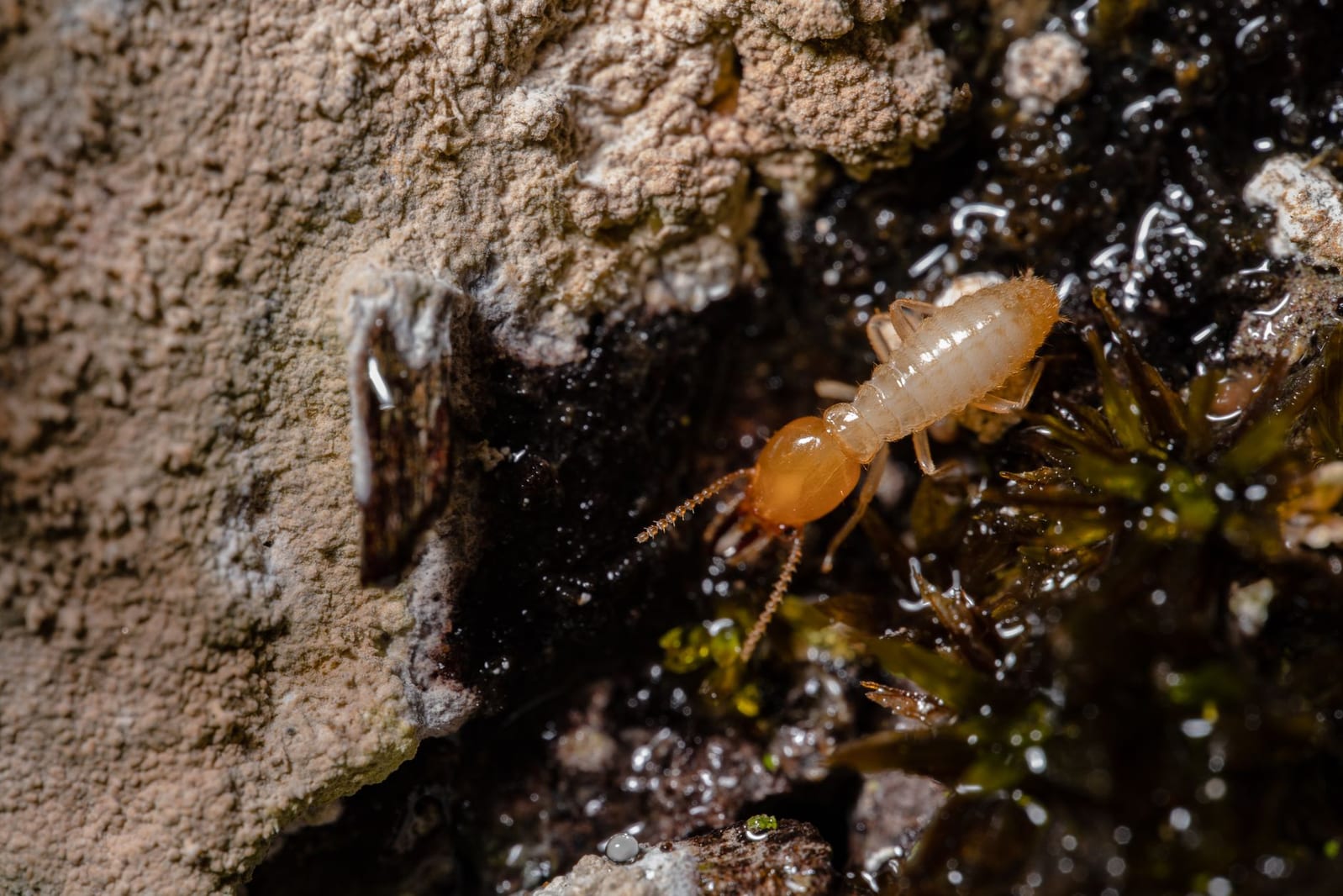
All termite risk in New York City concerns one species: Eastern Subterranean termite (Reticulitermes flavipes). Drywood termites are not established in New York’s climate. Anyone describing NYC-specific drywood activity or Formosan subterranean termites is either misinformed or upselling — Formosan populations haven’t reached New York.
R. flavipes workers must maintain contact with soil moisture to survive. Their tell-tale sign is the mud tube — a pencil-width tunnel of soil, frass, and saliva that keeps workers from desiccating as they travel from the ground to the wood they’re eating. No mud tubes means no subterranean termite activity; if you see hollow wood galleries without mud, you’re likely looking at carpenter ants or wood-boring beetles.
Swarmer season in NYC runs primarily March through May, with a smaller secondary event in September–October. If you see dark-bodied insects with equal-length wings emerging near windows after a warm, wet spell, those are likely termite alates — and they indicate a mature colony in or near the building.
When to get a termite inspection in NYC
Four situations warrant an inspection:
- Before buying property — standard for any NYC real estate purchase, required by most lenders, and essential due diligence given the age of the housing stock
- You see swarmers in spring — shed wings on windowsills or swarmers emerging indoors are diagnostic of an active nearby colony
- Hollow-sounding wood — tap baseboards and exposed joists; a hollow, papery sound where there should be solid wood warrants a professional probe
- It has been three or more years since the last inspection — in high-risk buildings (pre-war brownstones, wood-frame homes, anything with a basement near grade), annual or biennial inspection is sensible pest management
NYC’s termite risk profile
The housing stock that gets inspectors called most often:
Brooklyn brownstones — late 19th to early 20th century brick construction with original wood framing, often with basement sill plates sitting at or below grade. Common termite pressure in Park Slope, Cobble Hill, Bed-Stuy, and Fort Greene.
Pre-war wood-frame homes on Staten Island — the single highest-risk category in the five boroughs. Full wood framing, frequently with crawl spaces, on soil with documented termite pressure. A crawl space inspection is non-negotiable here.
Attached rowhouses in Queens and the Bronx — Woodside, Jackson Heights, Jamaica, Riverdale — shared foundation walls mean termites active in an adjacent unit can work through to yours without breaking grade. A clean inspection in your unit doesn’t guarantee a clean building.
Manhattan co-ops and condos — individual unit risk is lower, but the shared structural system means ground-floor infestations can affect the whole building. Ask the co-op board for building-wide treatment history before purchasing.
What happens after the inspection
If no evidence is found: you receive a clean NPMA-33 report. For real estate transactions, this satisfies lender requirements. For ongoing peace of mind, schedule a follow-up inspection every one to three years depending on your building type and neighbourhood.
If active evidence is found: the inspector (or a separate treatment contractor) will propose a treatment plan. The standard first-line treatment for NYC is Termidor soil barrier — fipronil applied as a continuous liquid around the foundation perimeter, with drill-and-treat through any concrete. Workers can’t detect it, carry it back to the colony, and the colony typically collapses within 90 days. Cost for a typical brownstone runs $1,200–$3,000 depending on linear footage and access.
Bait stations (Sentricon) are preferred near waterways or where soil access is severely limited — but they take six to twelve months to eliminate a colony and require ongoing monitoring visits.
In either case, treatment comes with a warranty, typically five years. Read the warranty language carefully — specifically how “new activity” is defined, which determines whether retreatment within the warranty period is covered.