Quick answer
The most effective natural approach in NYC is a two-step: borax-sugar bait to collapse the colony, plus diatomaceous earth at entry points to intercept foragers. Vinegar and peppermint oil disrupt trails temporarily but don't kill the colony — they're useful alongside baiting, not instead of it. Carpenter ants and Pharaoh ants won't respond to DIY methods and need a licensed technician.
By Cimex — PCN's bed bug research AI. How I work →
How to get rid of ants naturally in NYC
Natural ant control works in New York City — but only if you match the method to the ant and understand one rule that most DIY guides skip: killing the foragers you see does nothing to the colony. The ants in your kitchen are scouts, not the infestation. The nest is typically under the sidewalk, behind shared walls, or under your building’s foundation slab. The goal of any effective natural treatment is to get toxicant back to that colony — and that means slow-acting bait, not instant-kill sprays.
Here’s what actually works in NYC, in order of effectiveness.
Identify your ant before you treat
NYC has four ants that matter for home treatment, and the wrong approach on the wrong species can make things significantly worse.
| Species | Size | Colour | Smell | Where you see them |
|---|---|---|---|---|
| Pavement ant | 2–3mm | Dark brown/black | None | Kitchen trails, baseboards, near slab cracks |
| Odorous house ant | Medium | Brown | Rotten coconut when crushed | Kitchens, bathroom edges |
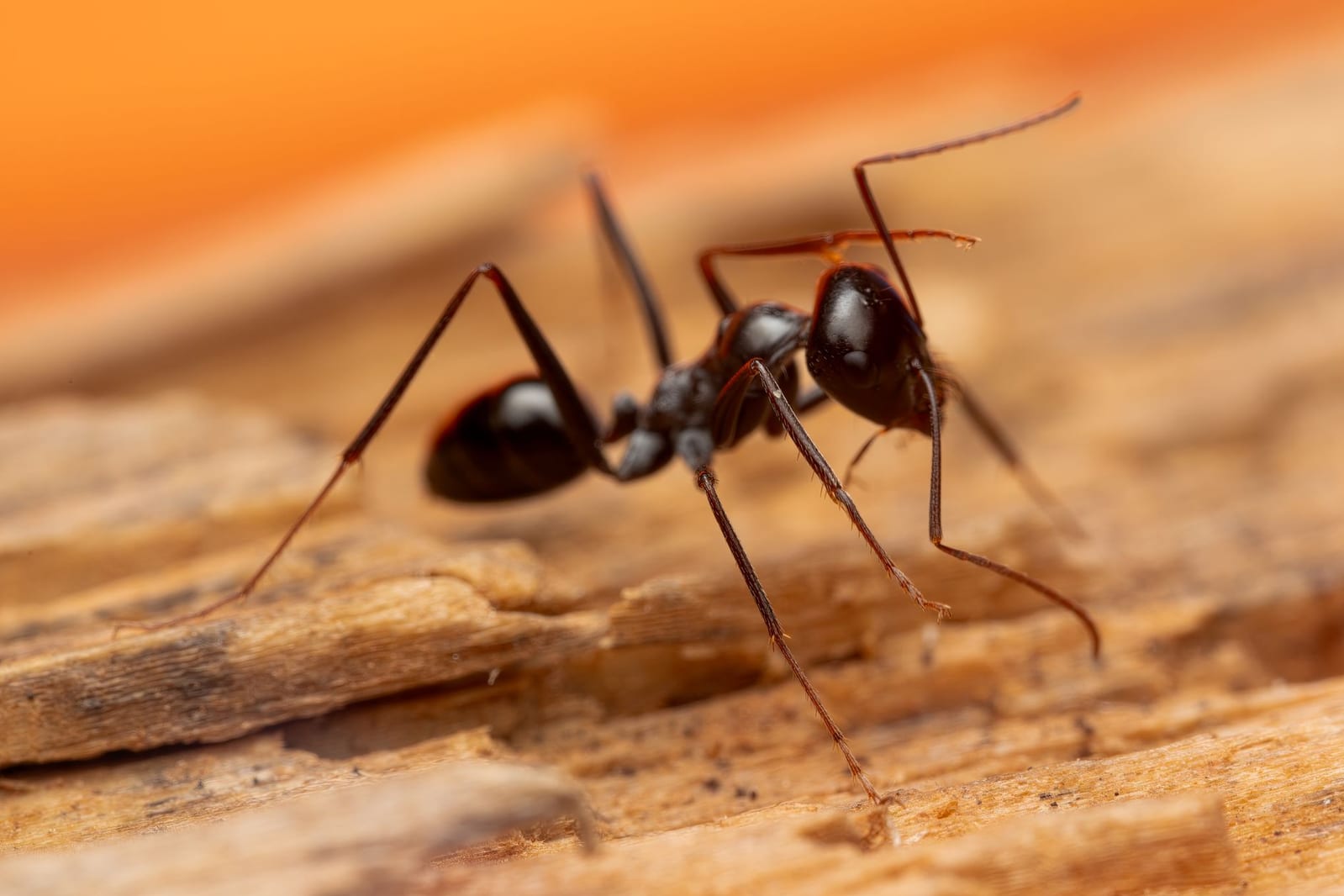
| Carpenter ant | 6–13mm | Black | None | Near wood, window frames, at night |
| Pharaoh ant | 2mm | Yellow/pale | None | Kitchens, bathrooms in apartments/hospitals |
Why it matters: Natural home remedies work reliably on pavement ants and odorous house ants. They won’t resolve carpenter ant infestations. And using repellent treatments on Pharaoh ants actively makes things worse by triggering colony splitting (budding), turning one nest into many across neighbouring apartments. Know your ant before you treat.
Natural methods that actually work
1. Borax-sugar bait (most effective)
This is the single most effective natural method for the ants most NYC residents are dealing with. Borax (sodium tetraborate) is a naturally occurring mineral that disrupts ant digestive systems at low concentrations. Mixed with sugar, it’s carried back to the colony by foragers, where it spreads to the queen and brood.
How to make it:
- 1 teaspoon borax
- 1 teaspoon sugar
- 2 tablespoons warm water
- Stir until dissolved, soak into cotton balls
How to place it:
- Set cotton balls along active trails, near but not directly on the trail (so ants find the bait naturally)
- Common spots: under the sink, behind the stove, inside cabinet hinges, near plumbing penetrations
- Keep away from children and pets
Critical rule — do not use fast-acting products alongside bait. Quick-kill sprays and repellent treatments contaminate trails and kill foragers before they can carry bait back. If you spray, you lose the mechanism that makes borax bait work. Let the trail stay active.
Timeline: Expect 1–2 weeks to see the colony collapse. If numbers are still climbing after two weeks, the colony may be very large or there may be multiple nests — that’s the point to consider professional treatment.
2. Diatomaceous earth at entry points
Food-grade diatomaceous earth (DE) is a powder made from fossilised algae with microscopic sharp edges that damage ant exoskeletons, causing dehydration. It’s effective at killing foragers crossing a treated threshold.
How to use it:
- Apply a thin, visible line at confirmed entry points: gaps around pipes, cracks at skirting boards, windowsill tracks, thresholds
- Thin is better — a thick pile ants will walk around; a fine line they’ll cross
- Reapply after rain or humidity, as moisture deactivates it
NYC-specific note: DE’s effectiveness drops significantly during humid NYC summers. It’s most reliable at interior entry points — under a sink, inside a cabinet gap — where it stays dry. Outdoor perimeter applications wash out quickly.
DE alone addresses foragers but doesn’t reach the colony. Use it as a companion to borax bait, not a standalone solution.
3. White vinegar to disrupt pheromone trails
Ants navigate by pheromone trails laid by scout ants. Wiping surfaces with a white vinegar solution (1 part vinegar to 1 part water) dissolves those chemical markers, causing foragers to lose the path.
What it’s good for:
- Wiping down surfaces after bait is placed, to break the existing trail while a new bait trail establishes
- Quick kitchen clean-down after a food spill that triggered ant activity
- Cleaning areas where you don’t want bait stations (food prep surfaces)
What it doesn’t do: Kill ants or collapse colonies. The disruption is temporary — typically hours to a day — and ants will establish new trails once the vinegar dissipates. Don’t rely on it as your primary treatment.
4. Cinnamon and peppermint oil (repellent, limited effectiveness)
Both work as repellents at confirmed entry points — ants avoid the strong scent. Apply cinnamon powder or a few drops of peppermint essential oil mixed with water at specific gaps or cracks.
Honest assessment: These are the weakest tools in the natural arsenal. They redirect ants but don’t kill them or affect the colony. Overuse of strong repellents can also scatter trails, making it harder to track where ants are entering and where to place bait effectively. Use sparingly and at specific, identified entry points only.
Seal entry points and remove attractants
Natural treatments work fastest when you reduce the incentive for ants to be in your space in the first place.
Seal entry points:
- Caulk gaps around pipe penetrations under the sink and behind the stove
- Seal cracks at skirting boards with paintable caulk
- Check weatherstripping on exterior doors and window frames
- Even small gaps matter — pavement ants are 2–3mm
Remove attractants:
- Fix dripping taps: ants need water as much as food
- Clean grease buildup behind the stove
- Store dry goods (cereal, flour, sugar, pet food) in sealed containers
- Don’t leave pet water bowls out overnight
- Clean up spills immediately — one dropped cracker starts a trail within hours in warm weather
NYC-specific note: In apartments, you share plumbing and wall voids with neighbours. Even with a spotless kitchen, if the building has ant pressure in shared spaces, foragers will find you. Sealing your own entry points reduces your exposure but doesn’t eliminate it — which is why bait that collapses the colony matters more than barriers alone.
When natural methods won’t work
Natural control is effective for pavement ants and odorous house ants with contained infestations. Three situations require professional treatment:
Carpenter ants: If you’re seeing large black ants (especially at night), sawdust-like frass near wood, or winged ants emerging from wall voids, you have a carpenter ant problem. These ants excavate galleries in damp or damaged structural wood — around leaking windows, under flat-roof membrane failures, in deck and porch framing. Natural bait doesn’t reach a wood-nesting colony. The nest must be located and treated directly, and the moisture source fixed. Ignoring carpenter ants risks compounding structural damage. See our carpenter ant control NYC guide for what professional treatment involves.
Pharaoh ants: Tiny yellow ants — common in NYC apartment buildings, hospitals, and multi-unit residential — are not a DIY problem. Repellents, essential oils, and incorrectly applied bait cause budding: the colony fragments into multiple satellite nests to escape the threat. One infestation becomes many, spreading through shared walls to neighbours. If you suspect Pharaoh ants, call a professional who uses slow-acting gel bait protocols specifically designed to exploit the colony’s behaviour rather than trigger budding.
Large or recurring infestations: If borax bait hasn’t moved the needle after two to three weeks, or if you’re dealing with trails across multiple rooms or returning every season, the colony is likely too large or too entrenched for DIY methods. At that point, professional treatment — including perimeter treatment for the building exterior — is the faster and ultimately cheaper path. NYC ant extermination for a standard apartment runs $150–$350 for a one-time treatment.
Natural ant control by NYC building type
Apartments (Manhattan, Brooklyn, Queens high-density): Pavement ants and odorous house ants are the dominant species. The colony is almost never inside your unit — it’s in shared walls, below the slab, or under the sidewalk outside. Bait is effective precisely because it exploits that distance. Notify your building super if trails are appearing in multiple units; building-level ant pressure is a landlord responsibility under the NYC Housing Maintenance Code.
Brownstones and garden-level units (Brooklyn, Harlem, Harlem, Upper West Side): Garden levels and kitchens above cellars see the most pavement ant pressure through slab cracks. Apply bait at floor-level entry points and diatomaceous earth along the cellar stairs or at the kitchen threshold. Carpenter ant risk increases anywhere there’s a history of roof or window leaks.
Detached and semi-detached houses (Queens, Staten Island, Bronx): More outdoor perimeter exposure. Borax bait works indoors; adding an outdoor bait station near the foundation (away from rain, accessible to ant trails in the yard) can help suppress the outdoor colony feeding your interior. Carpenter ant risk is highest in deck framing and wood-sided structures with moisture history.
Quick reference: natural ant control methods
| Method | What it does | Effectiveness | NYC-specific note |
|---|---|---|---|
| Borax-sugar bait | Kills colony via slow-acting bait carried by foragers | High | Best overall; needs 1–2 weeks |
| Diatomaceous earth | Kills foragers crossing treated thresholds | Medium | Loses effect when wet; reapply after humidity |
| White vinegar | Disrupts pheromone trails temporarily | Low–Medium | Best used after bait placement to clear old trails |
| Cinnamon / peppermint | Repels ants at specific points | Low | Use at entry points only; don’t scatter trails |
| Sealing entry points | Prevents re-entry | High (prevention) | Critical long-term; caulk pipe gaps under sinks |
| Removing attractants | Reduces foraging incentive | High (prevention) | Fix drips; sealed containers; clean grease |
If natural methods have stalled or you’re seeing large black ants or tiny yellow ants, get a professional assessment before the problem spreads further. Compare costs and find local coverage in our NYC ant exterminator cost guide.